In short: Google Business Profile (formerly Google My Business) is a free business listing that appears in Google Search, Google Maps and Waze. Creating it is free, management now happens directly inside Search and Maps rather than in a separate app, and verification is handled in most cases by video rather than a mailed postcard. What decides whether the profile actually generates calls is maintenance: an accurate primary category, fresh photos, replies to reviews and regular posts. This guide also covers what most guides skip: what to do when verification is rejected, when the profile is suspended, or when the business simply does not show up on Maps.
Google Business Profile is a free tool that lets any business create a listing shown in Search when people look for it by name, or search a related category in a local result matched to their location. The profile is one channel out of three: for the full picture of how to advertise a business on Google, read the complete guide. One of the highest-return fields to fill in is the contact link, so it is worth preparing a clean link in advance with the WhatsApp link generator.
Where will your business be displayed when you open a business page?
Once the profile is live, your business is displayed in Google Search, Google Maps, Waze and Google Images.
This is how it looks in Search
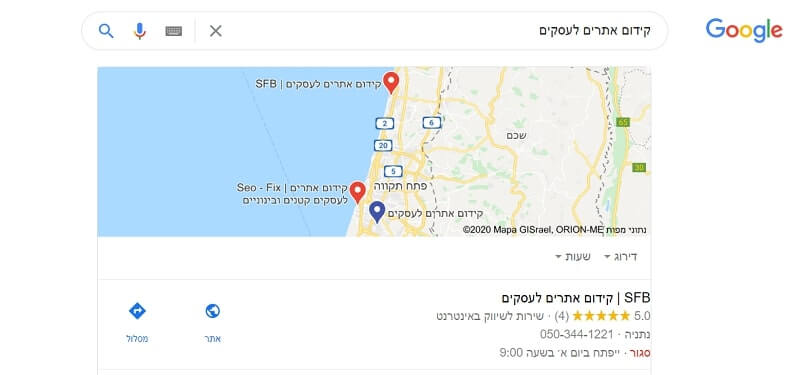
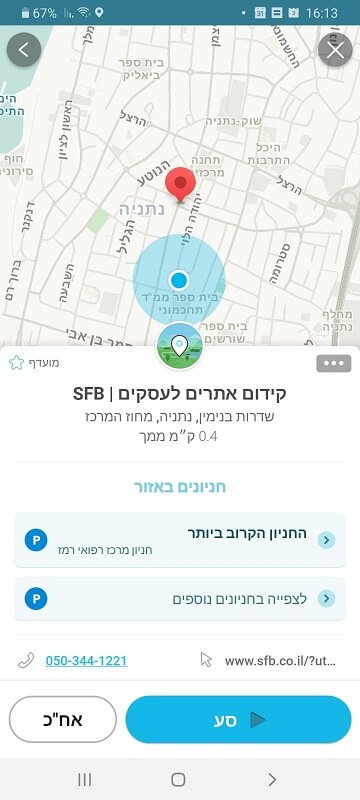
This is how it looks in the Waze app
What can you show on a Google Business Profile?
- Business name
- Directions, if you have a physical location
- Link to the company website
- Customer reviews
- Business address
- Opening hours
- Contact phone number
- Business description
- Photos
- Products
- Posts
How does it help the business?
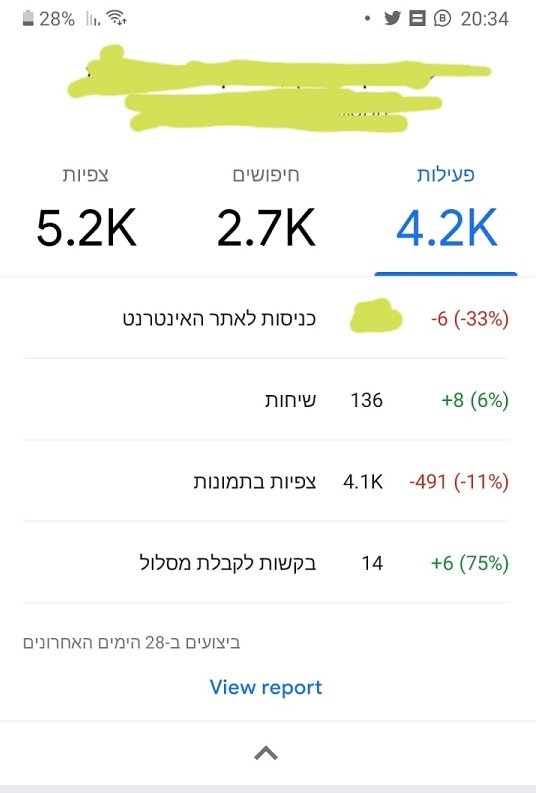
A business profile strengthens your presence in Google Search. People searching for your business name, in Search, Maps or Waze, find you quickly, navigate to you easily and, most importantly, call you straight from the listing. They also read reviews from existing customers, and that is usually what closes the decision. Some local businesses, auto repair shops being a classic example, get most of their phone calls from this listing rather than from their website.
For service businesses that work by area, such as photographers, the profile is half of SEO. Our SEO guide for photographers explains how to ask for reviews that mention the event type and city, and how to choose categories and a service area.
How to create and verify a Google Business Profile in 2026
Signing up has not changed much: go to Google Business Profile, sign in with the business Google account, and fill in the details step by step: name, primary category, address or service area, phone and website. The step that changed is verification.
Since 3 July 2026, video verification is the default in most cases, replacing the mailed postcard with a code. In practice this means a single continuous clip, unedited and uncut, that has to show three things:
- That the location exists: the business signage, the entrance and enough of the surroundings to identify the address.
- That the business really operates there: equipment, stock, a workstation, a kitchen, tools, anything that proves genuine activity rather than an empty room.
- That you are authorised to manage it: keys, access to a staff-only area, an invoice or business document, a till receipt.
Two mistakes fail a large share of verifications: a clip filmed in segments and stitched together, and a clip that shows only a sign with no proof of activity inside. A service-area business with no public address still has to show branded vehicles, equipment or documents in the business name.
A business with more than one branch opens a separate profile per location, managed centrally from the same account, each with that branch's exact details. Google's rule: never create more than one profile for the same location.
Not verified, suspended, or not showing: diagnosis by symptom
This is the part most guides skip, and it is exactly what people look for once something breaks. The table translates what you see on screen into the likely cause and the next step:
| What you see | Likely cause | What to do |
|---|---|---|
| "Verification rejected" after a video | The clip missed one of the three elements, or it was edited and cut | Re-record in one continuous take: signage, interior with equipment, then a document or key proving authorisation |
| Profile is live but cannot be edited | Soft suspension | File an appeal. The profile keeps showing in the meantime, but every edit is blocked until it is released |
| Profile disappeared from Search and Maps | Hard suspension | File an appeal with documents. Do not open a new profile in parallel, that is the fastest route to a permanent ban |
| Business not on Maps although the profile is verified | Inaccurate category, unrecognised address, or heavy local competition | Tighten the primary category, confirm the map pin sits in the right place, and build reviews and activity |
| "Suggested edit was rejected" | The edit contradicts data Google collects elsewhere, usually your own website | Align the details on the site and in business directories first, then edit again |
| Two listings for the same business | A duplicate, usually an old auto-generated listing | Report the duplicate and request a merge, do not delete the listing that holds the reviews |
| Someone else owns the profile | A former employee, a previous marketing agency, or a user who claimed it | Submit an ownership request through the profile. If there is no response within about a week, Google lets you continue the process |
Soft vs hard suspension, and how appeals work in 2026
Which suspension type you are in decides how urgent the situation is and how much you are losing in real time:
| Soft suspension | Hard suspension | |
|---|---|---|
| Visible in Search and Maps | Yes | No |
| Can be edited | No | No |
| Existing reviews | Stay visible | Hidden until reinstatement |
| Business impact | Limited, mainly blocked maintenance | Immediate and painful: calls from the listing stop |
| What is required | An appeal | An appeal with supporting documents |
What to know before you click "appeal":
- On 8 July 2026 Google changed the appeal form and documents are now attached directly inside the form rather than sent in a separate step afterwards.
- There is a short window of about one hour to upload evidence once the form is open. Scan and prepare everything in advance: business licence, a utility or municipal bill in the business name, photos of the signage and storefront, and an invoice or bank document showing the address.
- The multi-location question (10 or more locations) moved to the start of the form, so chains are routed to the right track early.
- You file one appeal per suspension event. In practice there are usually only two chances before a profile is disabled permanently, so the first submission has to be accurate and complete.
- Timelines: a clean single-profile case with organised documents usually resolves within three to fourteen business days. Complex cases, mainly chains and sensitive verticals, can run three to six weeks.
The single most important rule: never create a new listing for the same business while the original is suspended. It breaches Google's policy and can turn a temporary suspension into a permanent ban.
The seven causes that take profiles down most often
Through 2025 and 2026 Google shifted much of its violation detection to automated AI systems, which means fully legitimate businesses sometimes get caught in the net too. These are the violations that recur most:
| Cause | What it looks like in practice | The fix |
|---|---|---|
| An address that is not a real place of business | A coworking space, a mailbox, the accountant's address | If you do not receive customers there, define a service area instead of a public address |
| Keywords in the business name | "Best Plumber NYC 24/7" instead of the legal name | Keep only the legal business name. Keywords belong in the description and services |
| Details inconsistent with the website | A different phone or address on the profile, the site and directories | Align name, address and phone everywhere before touching the profile |
| Too many edits at once | Changing name, address, category and phone on the same day | Change gradually. A mass edit looks to the system like a hijacked listing |
| Incorrect opening hours | "Open 24 hours" on a business that closes at night | Report real hours, including special holiday hours |
| Promotional content in information fields | Offers and phone numbers inside the business description | Offers go into a profile post, not the description field |
| Duplicate profiles | An old auto-generated listing plus the one you created | Request a merge and keep the listing that holds the review history |
Verticals considered high risk, such as locksmiths, towing and emergency repairs, are reviewed against a stricter standard, so keeping documentation ready in advance matters even more there.
What actually maintains a business profile: the 2026 checklist
A profile that is opened and forgotten stops producing results. This table summarises what to maintain, how often, and why it matters:
| What | Recommended frequency | Why it matters |
|---|---|---|
| Primary and secondary categories | Quarterly review | The category is one of the strongest signals for which local searches the profile fits |
| New photos | Monthly | A profile that is not updated loses visibility against active profiles in the same area |
| Replies to reviews | Within days of each review | Owner response rate has become a more meaningful signal than review count alone |
| Profile posts | Weekly to biweekly | Creates fresh content and updates customers on offers, events and services |
| Opening and holiday hours | Before every holiday | Wrong hours are a leading source of negative reviews and lost trust |
| Services and products | Whenever the offering changes | Widens the range of queries the profile can match |
The simple rule of thumb: if you have not touched the profile in 30 days, it already looks less active than the competitor down the street.
What changed in Google Business Profile in 2026
Three documented changes worth knowing, with their dates:
- The Questions & Answers section was discontinued. The API was removed in November 2025, the public feature began deprecating on 3 December 2025 and was rolled out of existence over the following months. It was replaced by a Gemini-powered interface inside Maps that generates an answer in real time instead of showing an old question thread.
- Video verification became the default on 3 July 2026 for new profiles and re-verification, replacing the mailed postcard. Failing to complete verification can lead to a temporary suspension of the profile.
- The appeal form was updated on 8 July 2026: documents attach inside the form, there is roughly a one-hour window to upload them, and the multi-location question moved to the start of the process.
The practical implication of the Gemini shift is the most important one: the new interface pulls answers from your content, your reviews and your profile fields in real time. In other words, there is no longer a way to hand-write the "right" answer and hope it gets shown. What determines what is said about your business is what is written on the profile, what is written on your website, and what is written in the reviews. Empty fields and a partial services list have become a direct cost in visibility.
Where to sign in and how to reach support
One of the most common questions is simply "where is it". The answer has changed: the standalone Google My Business app was discontinued, and management moved into Search and Maps. The three routes that work today:
- Direct search: search Google for your business name while signed in to the owning Google account, and the management panel opens above the search results.
- From Google Maps: open the business profile in Maps and use the management options.
- Multi-location: a business with several branches manages them all from the location management interface in the same account.
If you do not see the management options, it is almost always one of two things: you are signed in to a different Google account than the one that created the profile, or ownership sits with someone else. Support is reached from the Business Profile help centre, and multi-location businesses have a separate track. Bring the profile name, exact address and screenshots of the error to any support contact.
Frequently asked questions about Google Business Profile
Does a Google Business Profile cost money?
No. Creating the profile, managing it and appearing in Search and Maps are all free. Cost only appears if you choose to add paid advertising with Google Ads alongside it, or professional management of the profile and its content.
How can I advertise my business on Google for free?
The business profile is the main free route: it shows your business in Search, Maps and Waze with no cost per click. Alongside it there is a second free channel, organic SEO for your website, which costs time and work rather than media budget. Paid advertising is the only one of the three you pay Google for.
Why is my business not showing on Google Maps?
Four causes explain most cases: the profile is not verified yet, it is suspended, the primary category does not match the search you tested, or local competition is simply high and you sit below the top three local results. Check in that order, starting with verification.
I cannot verify my business on Google, what should I do?
In most cases the video did not show the three things Google looks for: that the location exists, that the business operates there, and that you are authorised to manage it. Re-record in one continuous take with no editing, start with the exterior signage, go inside and film equipment or stock, and finish with a document in the business name. A business with no physical address films branded vehicles, equipment and documents.
How do I delete my Google business profile?
You can mark the business as permanently closed, which is the right move when a business stops operating, or remove the profile from your account. The difference matters: removing it from your account does not erase the listing from Maps, because Google can keep showing information about a place that exists. Full deletion is mainly relevant for a duplicate, and there it is better to request a merge than a deletion, so you do not lose reviews.
What is the difference between Google My Business and Google Business Profile?
Same product, new name. Google My Business is the old name; today the product is called Google Business Profile, and management moved into Search and Maps instead of a separate app.
How long until the profile appears in search?
Usually days to weeks from the moment verification is complete. Appearing in the local results themselves depends on competition in the area, category relevance and how active the profile is.
How long does a suspension appeal take?
A clean single-profile case with organised documents usually resolves within three to fourteen business days. Complex cases can run three to six weeks. You file one appeal per suspension event, so the first submission needs to be complete.
Can I manage several branches in one account?
Yes. A multi-location business runs a separate profile per branch with that branch's exact details, under central management. Note Google's rule: never create more than one profile for the same location.
Someone else manages my business profile, how do I get ownership back?
Submit an ownership request from within the profile. The registered owner is notified and can approve or decline. If there is no response within a set period, usually about a week, Google lets you continue the process and prove ownership with documents. This is a common scenario after changing marketing providers or an employee leaving.
How does the business profile fit with the rest of Google advertising?
It is the free foundation. Alongside it run paid campaign management, which brings immediate leads, and organic SEO, which builds a long-term asset. The full comparison of all three channels is in the advertising a business on Google guide.