In short: Advertising for businesses in 2026 breaks into three layers: free owned channels (Google Business Profile, organic social, your existing mailing list), paid advertising billed per click or impression (Google Ads, Facebook and Instagram, YouTube, TikTok, LinkedIn), and organic SEO, which builds a long-term asset. In Israel, a small business starting with paid advertising typically invests ILS 3,000-5,000 per month in media plus ILS 1,800-2,500 in management fees. But the question that matters is not "how much does it cost" - it is how much you can afford to pay for a new customer and still profit, and that number can be calculated before a single shekel is spent. This guide maps the channels, gives real cost ranges for the Israeli market, calculates what a ILS 3,000 monthly budget actually buys in each vertical, and shows how to choose where to advertise based on your business rather than on fashion. In every one of those layers the cheapest contact channel is a business WhatsApp link - it costs nothing and reduces the friction of an enquiry to a single tap.
Businesses that choose to start with Meta will find the full process, from setting the objective to calculating the minimum daily budget, in the guide to running a Facebook campaign.
If your business sells products rather than services, the starting point is different. The Israeli ecommerce market behaves differently in every category, and online penetration changes the priority order between channels.
I am Shay Cohen, CEO and founder of SFB Digital Marketing. I have worked with businesses on digital advertising for more than 11 years as a certified Google Partner, and more than ILS 50 million in media budgets has passed through my hands, generating over ILS 400 million in sales. The numbers in this guide are ranges we see in the Israeli market in 2026, not theoretical estimates. Where the number depends on your specific business, I say so instead of offering a tidy figure.
Where to advertise a business in 2026: the full channel map
Before talking about budget, it helps to understand that there are three fundamentally different kinds of business advertising. They do not compete with each other - they operate at different stages of the customer cycle.
- Free owned channels: assets you control and pay no platform for - your Google Business Profile, organic social pages, your mailing list, your existing customers.
- Paid advertising: you buy exposure or clicks. You switch it on and off at will, results are immediate, and spending continues for as long as the campaign runs.
- Organic search (earned): you invest in content and in the site so you appear in natural results and in AI overviews. Slow to start, but the traffic does not stop when you stop paying.
The table below summarises the channels an Israeli business realistically considers in 2026, with the cost ranges we see in the field:
| Channel | Payment model | Practical monthly minimum | Time to first result | Best suited to |
|---|---|---|---|---|
| Google Business Profile | Free | ILS 0 (time only) | Days to weeks | Any business with an address or service area |
| Google Ads - Search | Per click (PPC) | ILS 3,000 | Immediate | Existing demand, people already searching |
| Facebook and Instagram | Per impression or click | ILS 2,500 | Days | Visual products, creating new demand |
| Google Shopping | Per click | ILS 3,000 | Immediate | Ecommerce stores with a product feed |
| YouTube ads | Per view | ILS 3,000 | Weeks | Brand building, explaining a complex product |
| Per click | ILS 5,000 | Weeks | B2B with high deal value | |
| Organic SEO | Content and management cost | ILS 2,500 | 3 to 12 months | Long-term asset, lowering acquisition cost |
Note the third column. The practical minimum is not the platform minimum - Google and Facebook will happily take ILS 20 a day. It is the level below which a campaign never gathers enough data for the algorithm to learn, so you pay without getting a system that improves. We covered that logic in depth in the paid advertising guide.
What business advertising really costs in Israel in 2026
The cost of advertising a business has three separate components that should not be mixed: the media budget that goes to the platform, the management fee that goes to an agency or freelancer, and one-off infrastructure costs (landing page, creative, measurement).
Cost per click by vertical
This is the number that dictates everything. On exactly the same budget, a business in a cheap vertical gets ten times more clicks than a business in an expensive one. These are the ranges we see in Israel in 2026:
| Cost level | Cost per click | Typical verticals |
|---|---|---|
| Low | ILS 1-5 | Fashion, consumer goods, restaurants, leisure, tourism |
| Medium | ILS 5-15 | Furniture, renovations, electricians, locksmiths, health |
| High | ILS 15-50 | Lawyers, accountants, insurance, mortgages, real estate |
| Very high | ILS 50 and above | Loans, finance, B2B software |
Total monthly investment by business size
| Business size | Media budget | Management fee | Total per month |
|---|---|---|---|
| Small business | ILS 3,000-5,000 | ILS 1,800-2,500 | ILS 4,800-7,500 |
| Mid-size business | ILS 5,000-15,000 | ILS 2,500-5,000 | ILS 7,500-20,000 |
| Large / ecommerce | ILS 15,000-50,000 and above | ILS 4,000-8,000 or 10%-15% of budget | ILS 19,000-58,000 and above |
On the one-off side: a solid landing page runs between ILS 1,500 and ILS 5,000, and visual creative varies with scope. A full breakdown of every cost component is in the how much Google advertising costs guide.
What a ILS 3,000 monthly budget actually buys
Nobody answers this one in numbers, so here is the arithmetic. Assume a media budget of ILS 3,000 per month on a search campaign, a reasonable 3% conversion rate from click to enquiry, and a 20% close rate from enquiry to paying customer. These are conservative, widely accepted working assumptions, and every business should replace them with its own figures.
| Vertical (average cost per click) | Clicks per month | Enquiries | New customers | Cost per customer |
|---|---|---|---|---|
| Low (ILS 3) | 1,000 | 30 | 6 | ILS 500 |
| Medium (ILS 10) | 300 | 9 | ~2 | ILS 1,500 |
| High (ILS 30) | 100 | 3 | Under 1 | ILS 5,000 |
| Very high (ILS 60) | 50 | 1-2 | Under 1 | ILS 10,000 and above |
The practical conclusion, and it is not a comfortable one: in a vertical where a click costs ILS 30 or more, a ILS 3,000 monthly budget simply cannot work on a broad search campaign. It will produce one or two enquiries a month, which is not enough to learn from and certainly not enough to draw conclusions. There are three real options in that situation: raise the budget, narrow the campaign drastically to a handful of high-intent purchase terms, or choose a different channel entirely. What does not work is spreading ILS 3,000 across an expensive vertical and being disappointed after two months.
The number that decides everything: what a customer is worth to you
Most business owners approach advertising from the wrong end. They ask "what budget do I have" instead of "what is a customer worth to me". The second question is the only one you can answer before spending money, and it is the one that determines whether the advertising will be profitable.
The formula is simple: maximum cost per enquiry = average deal value × gross margin × close rate. That is the break-even point, the price at which you neither made nor lost money. In practice, to leave room for profit, aim for a third to a half of that number.
| Average deal value | Gross margin | Close rate | Max cost per enquiry (break-even) | Practical profit target |
|---|---|---|---|---|
| ILS 500 | 40% | 25% | ILS 50 | up to ILS 20 |
| ILS 1,500 | 40% | 25% | ILS 150 | up to ILS 60 |
| ILS 5,000 | 40% | 25% | ILS 500 | up to ILS 200 |
| ILS 15,000 | 30% | 20% | ILS 900 | up to ILS 350 |
| ILS 50,000 | 25% | 15% | ILS 1,875 | up to ILS 700 |
Two notes that change the picture. First, if your customer has repeat value - they buy again, renew, or refer others - the calculation should be based on cumulative value rather than the first transaction, and you can then afford to pay considerably more per enquiry. Second, the close rate depends on you at least as much as on the advertiser: we expanded on that in the return on investment (ROI) guide, and in the work of conversion rate optimisation, which lifts that same rate without adding a shekel to the budget.
Advertising a business for free: what is genuinely possible with no budget
You can advertise a business for free, but it should be said honestly: free in platform spend, not free in time. These are the channels that genuinely work with no media budget, ordered by return on effort:
- Google Business Profile. The strongest free channel for a local business. The profile appears in search and on Maps and displays hours, photos, services and reviews. A business that completes the profile fully and collects reviews consistently gets quality traffic without paying per click. We covered the process in the Google Business Profile guide.
- Organic SEO. No payment to Google per click, but there is a content and management cost. It is the only channel where the investment compounds: content written today keeps bringing traffic two years from now.
- Organic social content. Works well for visual businesses and for businesses that sell through personality and expertise. It demands consistency, which is exactly where most businesses drop out.
- Your existing mailing list. The cheapest and most profitable channel in any business (see what an SMS marketing platform costs), and usually the most neglected. A customer who has already bought costs far less than a new one.
- Structured referrals and word of mouth. A systematic review request after every successful transaction is an advertising action in its own right, and it also feeds your Google Business Profile.
How to price that "free" correctly: if an hour of your work produces ILS 200 in profit and managing organic content takes 12 hours a month, the channel costs you ILS 2,400 a month in opportunity cost. Sometimes that is well worth it, and sometimes it is better to simply pay for clicks and get back to work.
How to choose where to advertise: four questions
Instead of asking "which is better, Google or Facebook", answer these four questions in order. The answers dictate the channel almost on their own.
- Is there demand already searching for you? If people type what you sell into Google (plumber, lawyer, running shoes), start with search. If the product is new or people do not know it exists, you will need to create demand on social.
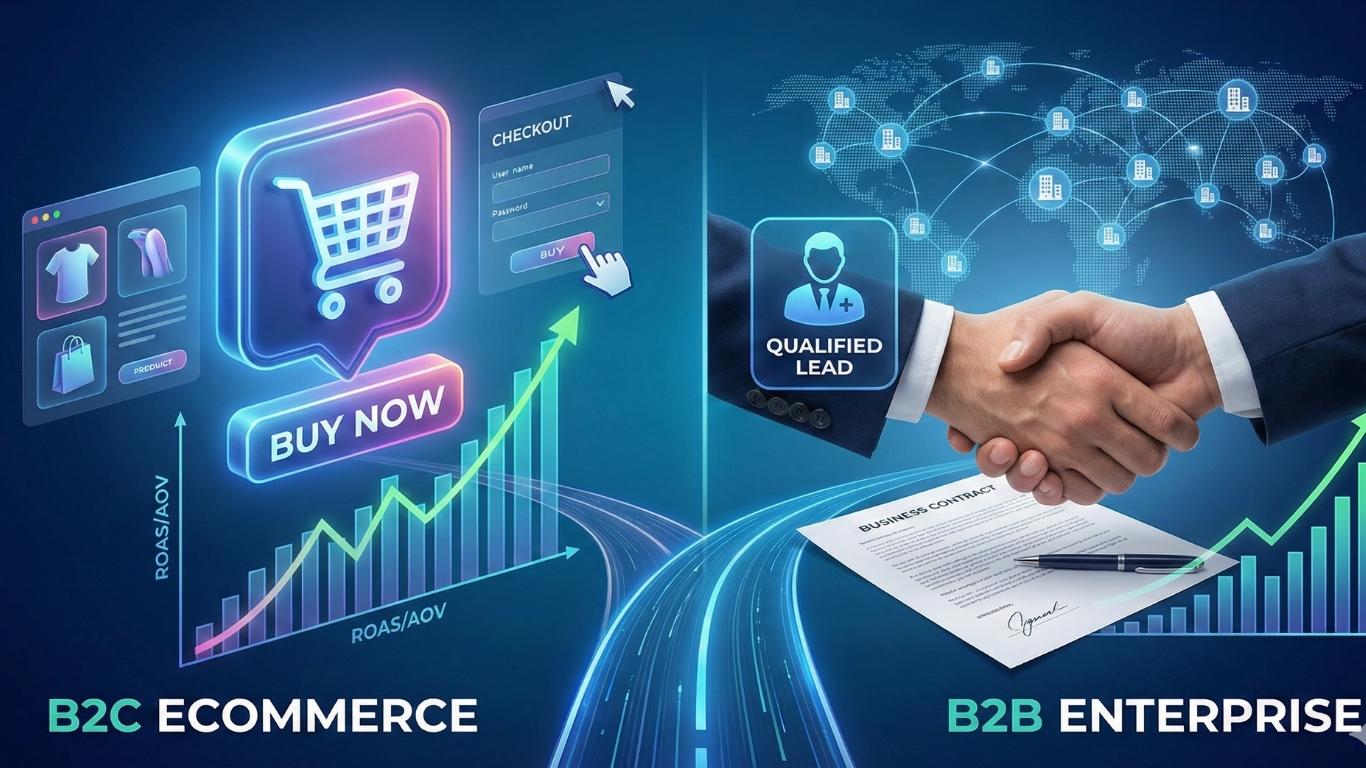
- What is your deal value? A small transaction demands a cheap, fast channel. A deal worth tens of thousands justifies expensive channels such as LinkedIn and a long sales process.
- Is the business local or national? A local business gets its highest return from the Google Business Profile and geo-targeted search, long before it touches social.
- How long can you wait? If you need enquiries this month, that is paid advertising. If you can build over a year, organic search will lower your acquisition cost over time. In most healthy businesses the answer is both, in that order.
Once you have chosen a channel, success is decided by the working routine rather than by the launch. We set out what to check daily, weekly and monthly in the campaign management guide. If the channel you chose is Google, the dedicated advertising a business on Google guide breaks down the three routes there. If you chose social, see advertising on social networks.
Five mistakes almost every business makes when it starts advertising
- Sending traffic to the homepage. The homepage answers "who are you", not the question the visitor searched for. A dedicated landing page for each advertising promise moves conversion rate more than any change inside the campaign.
- Advertising without measurement. With no working conversion tracking you are not managing a campaign, you are guessing. That is the first thing to close, before raising budget.
- Spreading a small budget across many channels. ILS 3,000 in one channel works. The same ILS 3,000 split across four channels works in none of them.
- Switching off after two weeks. A new campaign goes through a learning period. Judging too early leads to decisions based on noise.
- Measuring clicks instead of money. A campaign with many cheap clicks and zero enquiries is a failed campaign, however good the report looks.
What changed in business advertising in 2026
Two shifts genuinely change how a business should think about advertising this year. The first is that a substantial share of searches now display an AI overview above the results, so the user gets an answer without visiting a site. The practical meaning: being cited in that overview has become a channel of its own, and it is fed by well-sourced content and a complete business profile, not by media budget. The second is that paid platforms have moved almost entirely to AI-driven automation, and what the advertiser still controls is the input: measurement quality, creative quality and the quality of the page people land on. Those three have become the difference between campaigns, rather than the settings themselves.
Frequently asked questions about business advertising
How much does it cost to advertise a business in Israel?
A small business starting with paid advertising typically invests ILS 3,000-5,000 per month in media plus ILS 1,800-2,500 in management fees. A mid-size business sits around ILS 7,500-20,000 per month including management, and ecommerce or large businesses reach ILS 19,000 and above. Platforms impose no minimum, but below roughly ILS 2,500-3,000 per month a search campaign usually fails to gather enough data to improve.
Where is the best place for a small business to advertise?
A small local business starts with the Google Business Profile, which is free, and adds a geo-targeted search campaign on terms with clear purchase intent. A business selling a visual product or addressing a broad audience will get a better return from Facebook and Instagram. The practical rule: one channel done well beats four channels on a split budget.
Can you advertise a business for free?
Yes, in channels that require no platform spend: Google Business Profile, organic social content, your existing mailing list, review requests from customers, and organic SEO. It is important to understand that these are free in money but not in time. If an hour of your work produces ILS 200 in profit and running the channel takes 12 hours a month, the real cost is ILS 2,400 a month.
Which is better for a business, paid advertising or organic SEO?
Paid advertising delivers an immediate result and stops the moment you stop paying. Organic SEO takes 3 to 12 months but keeps bringing traffic after the investment stops. For most businesses the right answer is a combination: start with paid to generate enquiries and gather data on what actually converts, and build organic in parallel to lower acquisition cost over time.
How much advertising budget does a small business need to start?
The practical threshold on a search campaign is ILS 3,000 per month in media, and around ILS 2,500 on Facebook and Instagram. Below that the campaign does not accumulate enough conversions for the algorithm to learn. In verticals where a click costs ILS 30 or more, such as law, insurance or finance, a ILS 3,000 budget will yield only one or two enquiries a month, and it is better either to raise it or to narrow the campaign to a handful of very specific terms.
How long does it take to see results from business advertising?
In paid advertising the first clicks arrive on launch day, but a reliable picture emerges only after 4 to 6 weeks, once enough conversions have accumulated. On the Google Business Profile results arrive within days to weeks. In organic SEO the range is 3 to 12 months, depending on how competitive the vertical is and on the state of the site.
How much am I allowed to pay per enquiry?
Break-even is average deal value multiplied by gross margin multiplied by close rate. For example, a ILS 5,000 deal at a 40% gross margin and a 25% close rate gives a maximum of ILS 500 per enquiry. To leave actual profit, aim for a third to a half of that figure. If the customer has repeat value, base the calculation on cumulative value rather than on the first transaction.
For businesses that need to explain a product rather than answer existing demand, video is usually the cheapest way to buy attention. See YouTube advertising for businesses.
In summary
Business advertising is not a question of platform but of arithmetic. Once you know what a customer is worth, what a click costs in your vertical, and what the page converts at, you can tell in advance whether the budget you hold can work at all - and in which channel. A business that starts from those numbers saves itself months of trial and error, and also knows when the right answer is not to raise budget but to fix the page, the measurement or the offer.
On the cost side, the payslip simulator shows what an employee really costs and what actually reaches their bank account. Before raising an advertising budget it is worth making sure the internal numbers are clear: the gross to net calculator 2026 gives an accurate picture of salary costs, the employer cost calculator shows what hiring really costs, and severance completion is an expense most businesses do not budget for in advance. Quotes from media and suppliers sometimes arrive before VAT and sometimes including it, and the VAT calculator 2026 brings both presentations to the same basis for comparison.