
In short: promoting a fashion or clothing website in 2026 rests on four layers, and most stores only handle two of them. (1) The product feed - Google classifies clothing under Apparel & Accessories > Clothing (ID 1604), so free listings require color, gender, age group and size. (2) Organic architecture - the money keywords live on category pages, and color and size combinations generate thousands of filter URLs that need managing. (3) Images and variants - a front-facing photo of the garment on a model is also what qualifies a product for Google's virtual try-on badge. (4) Return economics - in apparel, a ROAS that looks profitable in the ads interface can lose money once returns and VAT are counted. Paid ads on Meta and Google Shopping bring sales from day one; these four layers are what bring the cost per sale down over time.
Fashion website promotion is how clothing stores, fashion brands and physical retailers grow online sales in a market that has already moved online. According to the figures in our complete ecommerce guide, fashion is the most mature online category in Israel, with 40-45 percent of category sales already happening online. That means simply being online is no longer an advantage, and every click is contested. This guide was written by Shay Cohen, CEO and founder of SFB, based on running campaigns and SEO for fashion stores in Israel and abroad, and every technical rule in it was checked against Google's official documentation on 13 September 2026.
Why promoting a fashion store is complex
A fashion store is not just another online store. Five traits of the category break patterns that work in other niches, so every strategy should start with them:
| Trait | What it breaks | What to do |
|---|---|---|
| Color and size variants | Duplicate URLs, feeds with thousands of rows, products disapproved for a missing field | item_group_id in the feed, ProductGroup on the site, managed filter URLs |
| Seasonality | Pages that lose rankings every time the collection changes | Permanent category URLs whose stock rotates, not a new URL every season |
| Fast sell-outs | Ranking product pages that turn into 404s | Keep pages for models that come back; 301 to the category only when a model is gone for good |
| High return rates | A ROAS that looks profitable but loses money | Calculate break-even ROAS after returns and VAT |
| Visual decisions | Categories and ads without strong images do not convert | Images that follow Google's guidelines and varied creative on Meta |
The six tips below are the marketing foundation. After them come the technical sections - feed, variants, images, architecture, returns, budget and AI - where most fashion stores lose.
1. Base decisions on data
The most important tip we can give you: base your decisions on data.
Guesses and gut feelings about the right move have long been out of fashion. Store managers now collect the data they already have, add competitor research and analyze it to produce consistent sales.
Tools like Google Analytics 4 show who visits the site, how many visitors actually buy, where carts are abandoned and which pages hold attention. In a fashion store, three reports matter more than the rest: sales by size and color (what sells out and what gets stuck), return rate by product (a product with unusual returns is usually a sizing or image problem, not an advertising problem), and the search queries driving traffic to each category in Search Console.
Once the data is collected and analyzed, build audience segments that describe your potential customers: how strongly they need the product, how they see it compared with competitors, and what makes them buy from you specifically.
2. Paid advertising on Google
Another tip for fashion websites is advertising on Google. Google shows ads at the top of the results page only for searches the advertiser has chosen, so the data from the previous tip decides which keywords and audiences to target.
For a clothing store, text ads are only part of the picture. Most of the budget usually flows through Google Shopping advertising and Performance Max, where the feed is the ad: the image, title, price and color come straight from product data. That is why the feed section below affects results more than any ad copy.
3. Organic SEO on Google
The third tip is just as important. A fashion website cannot rely on paid ads alone, because sales stop the day you stop paying. To build authority and lower the cost per sale over time, run organic SEO on Google in parallel.
Organic SEO covers technical improvements, matching content to the queries people actually search, and earning links from relevant sites. In a fashion store it relies first on category pages and on managing filter URLs correctly, which we cover in the organic architecture section.
4. Promotion through content
A site that offers content answering buying questions, not just products, ranks better and gets cited more by AI engines. In fashion, the content that works is content that helps people decide: detailed size guides per brand and fit, buying guides ("how to choose jeans for your body type"), fabric comparisons (linen vs cotton in a hot summer) and seasonal lookbooks that link straight to categories. Every such article should link to the category page it serves, so authority flows to the pages that sell.
5. Advertising on social networks

Social networks are critical for fashion, because that is where demand is created before Google captures it. Instagram and TikTok are the most relevant networks for most clothing brands, and Facebook and Instagram together are still the main paid sales engine for most fashion stores.
What changed in the last two years is that on Meta, creative matters more than audience settings: the Andromeda retrieval engine decides which ads even enter the auction, so a varied creative library is the most important input (full explanation in our Facebook campaign management guide). We saw this with a new men's apparel brand that went from zero to about ILS 43K in sales in month one and over ILS 100K in month two, on a steady stream of video, UGC and still variations. If you want professional support, this is exactly what our social media advertising service does.
6. Influencer partnerships: disclosed, labeled and amplified
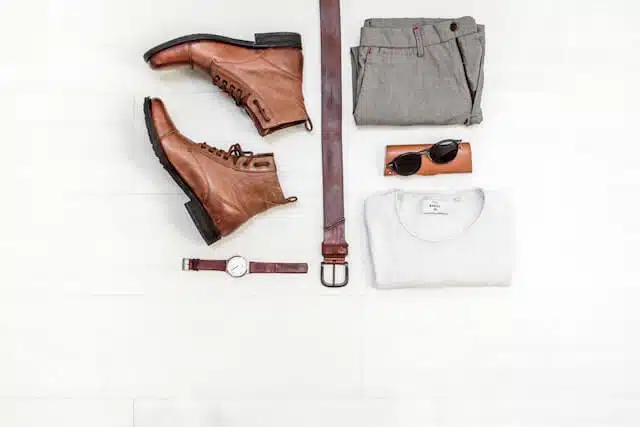
Fashion influencers are still one of the strongest channels for the category, because they show the garment on a real body and in motion - exactly what a product photo cannot. Two rules turn a partnership into a sales channel rather than just exposure:
- Disclosed and labeled. Even when content looks natural, a paid partnership should be labeled. On Meta this is done through the paid partnership label of the branded content tools, which is also what lets you run the creator's video as an ad.
- Measurable. A personal coupon code and a unique UTM per creator show who drives sales and who only drives views, so budget grows only on what has proven itself.
If your catalog also includes accessories and jewelry, note that Google classifies them in a separate category with different feed rules - we covered them in our jewelry website promotion guide.
Product feed for a fashion store: what Google requires for clothing
Most Google Shopping problems in clothing stores are feed problems, not budget problems. Google classifies clothing under Apparel & Accessories > Clothing (ID 1604) and shoes under Shoes (ID 187), both of which sit under Apparel & Accessories (ID 166). That classification decides which fields are mandatory:
| Attribute | When required | Practical rule |
|---|---|---|
color | Free listings: all of 166. Ads: 166 in 6 countries | The color name as shown on the product page; up to 3 colors separated by / |
gender | Free listings: all of 166. Ads: 166 in 6 countries | male, female or unisex |
age_group | Free listings: all of 166. Ads: 166 in 6 countries | adult for products not made only for children |
size | Only Clothing (1604) and Shoes (187), same rules | Each variant gets its own size |
size_system, size_type | Recommended | Size system (EU, US, UK) and fit (regular, petite, plus) |
item_group_id | Every product with variants | The same value for all colors and sizes of one model |
variant_option | Optional, added May 2026 | Explicitly marks what distinguishes variants; Google recommends sending it alongside color or size |
The six countries where these fields are also required for Shopping ads are Brazil, France, Germany, Japan, the United Kingdom and the United States.
What this means for an Israeli store: for Shopping ads targeting Israel only, Google does not require the four fields. But free listings require them in every country, so a store that skips them quietly gives up free exposure in the Shopping tab. As soon as you sell to the US or the UK, the same fields become mandatory for ads too, and products without them will not show. Even where a field is optional, Google states that missing required attributes lower product data quality and can reduce performance.
The contrast with jewelry shows how much the classification matters: jewelry sits under 166 but not under Clothing, so color is required and size is not - see the jewelry feed table.
Product titles. Google's apparel guidelines recommend Brand + Product Type + Important Attributes, with the key details in the first 70 characters. Three rules worth adopting: a standard color name in the title (people search "black dress", not "Paris Night") even when the color attribute holds the marketing name; the fit type such as petite, plus size or maternity when relevant; and gender or age group when they are not clear from the image.
Color and size variants: URLs, item_group_id and ProductGroup
One dress in five colors and six sizes is thirty products as far as Google is concerned. If they are not connected, Google sees thirty near-identical pages and shows them in a fragmented way. The connection happens in two places at once: in the feed through item_group_id, and on the site through ProductGroup structured data.
According to Google Search Central, ProductGroup groups variants with three properties: variesBy (what changes, for example size and color), hasVariant (the list of variants) and productGroupID (the parent SKU). Shared properties such as brand, material and audience are defined once at group level, and the markup makes products eligible for display with variant information in Google's merchant listing experiences. Google documents two ways to build the pages:
| Approach | What it looks like | When it fits |
|---|---|---|
| Single page | All variants selectable on one page, usually with a URL parameter like ?color=black&size=m | Most clothing stores and Shopify; authority concentrates on one URL |
| Multi page | Each variant (usually each color) has its own URL | When a color has its own search demand, such as "red evening dress" |
In both approaches, variant and filter URLs should not be indexed as standalone pages. One category with colors, sizes, brands and sort options easily produces thousands of combinations - we explained Google's priorities for handling this in our online store promotion guide.
Product images and virtual try-on: what Google asks of a clothing store
In fashion, the image is the decision. Merchant Center's official guidelines for apparel and accessories say:
- Resolution: at least 512x512 pixels, ideally 1024 or higher; Google recommends a minimum width of 1500 pixels.
- Aspect ratio: 9:11 for vertical images and 4:3 for horizontal images.
- Clothing on models: show how the item looks on a real person, without cropping the head or feet in full-body shots.
- Shoes, bags and accessories: alone in the main image, on a model in additional images.
- Background: solid white or transparent, plus extra angles and close-ups through
additional_image_link; lifestyle shots go separately inlifestyle_image_link.
Virtual try-on. Google's virtual try-on shows how a garment looks on real models across sizes from XXS to XXXL, and the try-on badge appears in both free listings and Shopping ads. According to Merchant Center Help, every brand with a shopping feed and high-quality imagery is opted in automatically. To improve the odds: one garment in the image, shown in full, on a front-facing model or mannequin with arms at the sides or laid flat without heavy folds; sleeves rolled down, hood down, zippers closed and tops untucked; and no hands, bags or accessories covering the garment. In other words, the image that meets the guidelines is also the ticket to the new feature, at no extra cost.
Organic architecture for a fashion site: categories, seasons and sold-out products
In a fashion store, money keywords almost never land on a product page. Someone searching "evening dresses" or "men's jeans" wants a selection, so category pages are the main organic asset. Here is how the work divides between page types:
| Page type | Example search | What to do |
|---|---|---|
| Main category | evening dresses | Indexed page with a unique title and description, a short text block and links to subcategories |
| Filter with demand | black evening dresses | A landing page with a clean URL and its own text, only when it has real search volume |
| Filter without demand | color + size + sort | Do not index; manage parameters following Google's faceted navigation guidance |
| Brand | brand name + garment type | A brand page with internal categories, when you stock third-party brands |
| Product | black linen maxi dress | Original description, size chart as text, Product and ProductGroup |
| Seasonal and sale | summer sale | A permanent URL whose content rotates, not a new dated URL every season |
| Sold out | a model coming back | Keep the page with OutOfStock availability; a discontinued model gets a 301 to the closest category |
The most expensive mistake we see in fashion stores is deleting a whole collection at the end of a season. Product and category pages that earned links and rankings disappear into 404s, and the store starts from zero every season. Permanent category URLs, with redirects only for what truly will not return, preserve authority year after year.
Return and shipping policy: a trust signal Google reads
In clothing, the return policy is part of the offer. Under Israel's Consumer Protection Law, a customer in a distance sale may cancel within 14 days of receiving the product, with cancellation fees capped at 5% of the price or ILS 100, whichever is lower. Many stores offer more than that, and that is exactly the detail worth highlighting.
Google can read the policy and show it next to products and in the business knowledge panel through MerchantReturnPolicy structured data. According to Google Search Central, a standard policy that applies to most products is defined under Organization using hasMerchantReturnPolicy, and a product with an exceptional policy gets its own under Offer. Google recommends keeping the policy on a single page rather than on every page. The same details can also be set in Merchant Center's return and shipping settings.
| Property | Example value | Meaning |
|---|---|---|
applicableCountry | IL | The country where the policy applies |
returnPolicyCategory | MerchantReturnFiniteReturnWindow | There is a defined return window |
merchantReturnDays | 14 or 30 | Number of days to return |
returnMethod | ReturnByMail or ReturnInStore | Return by mail or in store |
returnFees | FreeReturn or ReturnShippingFees | Free return or paid return shipping |
refundType | FullRefund | Full refund |
Budget and measurement: break-even ROAS after returns and VAT
Ad platforms report revenue on the order date, before some of the clothes come back. In a fashion store that gap is the difference between a profitable and a losing campaign. The basic calculation:
Break-even ROAS = 1 ÷ (gross margin × (1 - return rate))
Gross margin is calculated on the selling price before VAT. If the feed and ads interface report prices including VAT, multiply the result by 1.18. The table shows the point below which every sale loses money:
| Gross margin | Returns | Break-even before VAT | Break-even incl. VAT |
|---|---|---|---|
| 50% | 0% | 2.00 | 2.36 |
| 50% | 15% | 2.35 | 2.78 |
| 50% | 30% | 2.86 | 3.37 |
| 60% | 0% | 1.67 | 1.97 |
| 60% | 15% | 1.96 | 2.31 |
| 60% | 30% | 2.38 | 2.81 |
The calculation excludes return shipping, payment fees and operating costs, so the real break-even point is higher. A store with a 50% gross margin and 30% returns that measures a ROAS of 3 including VAT feels profitable, and is actually losing money. You can run your own numbers in our ecommerce profitability calculator.
Here is how the roles divide between channels in a fashion store:
| Channel | Role | What to measure |
|---|---|---|
| Google Shopping and Performance Max | Capturing existing demand ("black dress size 40") | ROAS after returns, by category |
| Facebook and Instagram | Creating demand and building the brand | Cost per acquisition and blended ROAS across channels |
| TikTok and influencers | Discovery, mainly for younger audiences | Sales by coupon and UTM |
| Organic SEO | Lowering the cost per sale over time | Traffic and revenue to category pages |
| Email and SMS | Bringing customers back | Revenue from repeat customers |
In practice, a new fashion brand almost always starts with Meta, because it has no search demand yet. With the men's apparel brand we worked with, budget grew gradually and only on what actually returned, and the creative is what made it possible to scale without breaking efficiency.
How a fashion store shows up in ChatGPT, AI Overviews and AI Mode
Fashion buying questions in AI engines are almost always comparison and fit questions: "which jeans suit a tall man", "a summer wedding dress under ILS 400". Google has described shopping in AI Mode as product grids and comparison tables alongside virtual try-on, and that information comes from the same feed and structured data. Four things improve the odds of the store appearing:
- A size chart as text, not an image. A language model cannot read a photographed table. An HTML table with measurements in centimeters, plus a fit note ("the model is 1.72 m and wears S"), is content AI engines draw from.
- Conversational attributes in the feed. In May 2026 Google added optional feed attributes meant to feed AI experiences, including
question_and_answer,item_group_titleandvariant_option. For a clothing store, questions and answers about fit, fabric and care are the natural place to start. - Comparison content and buying guides that link to categories, as explained in tip 4.
- A clear brand entity: a real about page, a visible return policy, reviews and mentions on other sites. AI engines cross-check sources before recommending a brand they do not know. We expanded on this in our Shopify SEO guide.
Checklist: 10 checks for a fashion store before scaling budget
- Every clothing product in the feed includes
color,gender,age_groupandsize. - All variants of a model share the same
item_group_id. - Product titles follow Brand + Product Type + Attributes, with a standard color name.
- The main image is at least 1500 pixels wide, garment on a front-facing model.
- Product pages include Product and ProductGroup with
variesBy. - Filter and sort URLs are not indexed, except landing pages with real demand.
- Seasonal categories have permanent URLs.
- Sold-out products are marked OutOfStock rather than deleted.
- The return policy lives on one page with MerchantReturnPolicy.
- Campaign ROAS targets are calculated after returns and VAT.
Summary
Fashion website promotion works when both sides work together: the marketing side - data, creative, influencers and content - and the side Google reads: a feed with the required clothing attributes, connected variants, images that follow the guidelines, an architecture that is not wiped every season, and measurement that accounts for returns. A store that handles both pays less for every sale and appears in both regular search and Google's AI experiences. If you want us to check your store against the checklist, talk to us.
Frequently asked questions about fashion website promotion
How much does fashion website SEO cost?
Organic SEO for a fashion store usually costs between ILS 2,500 and ILS 10,000 a month, depending on catalog size, number of categories and competition. The ad budget for Google Shopping and Meta is separate and is set by the sales target and the break-even ROAS. Details of what each level includes are on our SEO packages page.
How long does organic SEO take for a fashion website?
Meaningful organic traffic to category pages in a competitive niche like fashion usually takes six months to a year. Feed fixes and structured data work much faster, within days to weeks, so start with them and build organic in parallel.
Do I have to send size in the feed if the store sells only in Israel?
For Shopping ads targeting Israel only, size is not required. For free listings it is required for all Clothing (1604) and Shoes (187) products in every country, and Google notes that missing required attributes lower product data quality. In practice, always send it.
What is better for a fashion store: Google Shopping or Facebook and Instagram?
It is not a choice but a division of roles. Google Shopping captures people already searching for a specific product, and Meta creates demand among people who do not know the brand yet. A new brand without search demand usually starts with Meta, while a store with known brands and wide stock often sees faster returns from Google Shopping.
How do I get the virtual try-on badge on Google?
There is no sign-up. According to Merchant Center Help, brands with a shopping feed and high-quality images are included automatically. What improves the odds is an image of a single garment, shown in full, on a front-facing model or laid flat, at 1024 pixels or more. Advertisers who do not want the feature in ads can ask Merchant Center support to opt out.
What should I do with a sold-out product page?
If the model is expected to return, keep the page live with OutOfStock availability and a back-in-stock option. If it is gone for good, 301 redirect to the closest category or model. Deleting a ranking page into a 404 is the fastest way to lose traffic.
Should color and size filter pages be indexed?
Only when they have real search demand, such as "black evening dresses", and then as a landing page with a clean URL and its own text. All other combinations of color, size, brand and sort should stay out of the index, because they waste crawl budget and slow the discovery of new products.
How is promoting a fashion website different from a jewelry website?
The main difference is the feed. Clothing and shoes require size and jewelry does not, because jewelry is classified under Jewelry (188) rather than Clothing. Return rates and seasonality are also higher in clothing, so ROAS calculation and URL management matter more. The full comparison is in our jewelry website promotion guide.
Sources and review date
All technical rules on this page were checked on 13 September 2026 against Google's official documentation: the Merchant Center Help pages for the color, size, gender and age_group attributes, the best practices for advertising clothing and accessories, the apparel virtual try-on help page and the missing-attributes issue page; and the Google Search Central documentation for product variant structured data (ProductGroup) and merchant return policy structured data (MerchantReturnPolicy). Israeli online penetration figures come from our complete ecommerce guide, and the fashion brand results come from our client story. Feed requirements change; if anything conflicts, Google's official documentation prevails.